Buy casinojobs.eu ?
We are moving the project
casinojobs.eu .
Are you interested in purchasing the domain
casinojobs.eu ?
domain@kv-gmbh.de · 0541-91531010
Buy casinojobs.eu ?
What does isometry mean in art?
Isometry in art refers to the use of geometric shapes and forms that maintain their size and shape regardless of their position or orientation in space. This technique creates a sense of balance, harmony, and stability in the artwork. Isometric art often features precise, straight lines and angles, and is commonly used in architectural drawings, technical illustrations, and graphic design to convey a sense of accuracy and order. **
How is a standardized isometry correctly drawn?
A standardized isometry is correctly drawn by following specific guidelines. First, ensure that all three axes (x, y, z) are drawn at 120-degree angles to each other. Next, draw the object or shape in question with accurate proportions and angles, making sure to maintain the 120-degree relationship between the axes. Finally, label the axes and any important points or dimensions to clearly communicate the isometric view. By following these steps, a standardized isometry can be accurately and effectively drawn. **

Similar search terms for Isometry
Top-Angebote
Products related to Isometry:
-
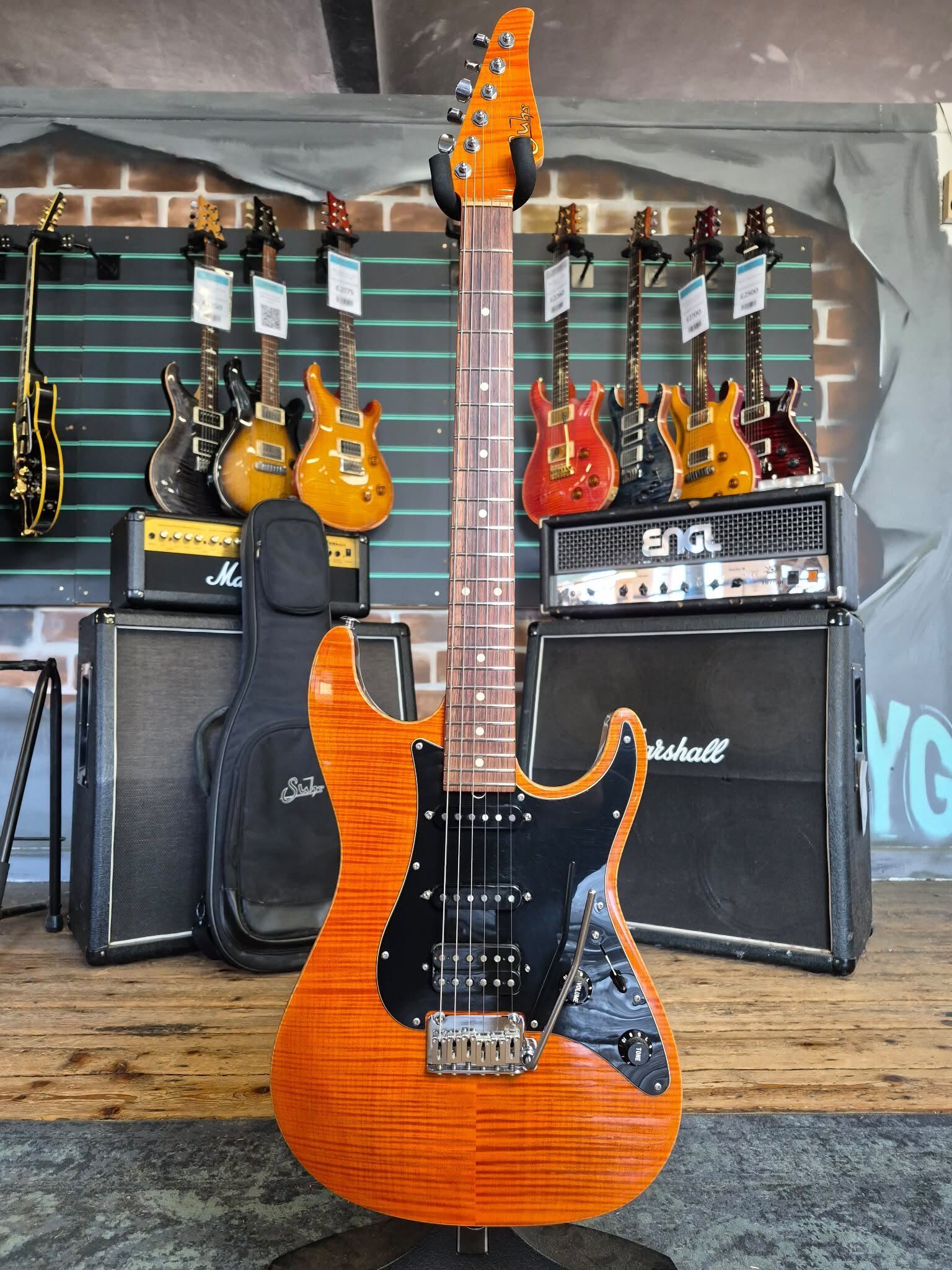
Suhr Pro Series S3 Dealer Select GG Orange 2011 Electric Guitar orange - RefurbishedThis is a Suhr Pro Series S3 Dealer Select electric guitar in Custom GG Orange finish with matching headstock. Suhr guitars are the work of John Suhr, who started his career as a guitar technician at Rudy's Music Stop in NYC. He began building guitars in 1974; creating Mark Knopfler's famous signature model under the Pensa-Suhr name in 1984. Made in the USA, this guitar is a custom order of 3 of 5 guitars that were commissioned by Guitar Guitar, features include a bolt-on construction comprising a Basswood body with a Flamed Maple top, Maple neck and a 22 Stainless Steel fret Indian Rosewood fingerboard. This guitar is equipped with Chrome hardware including a Gotoh 510 2-Post tremolo bridge with Steel Block Saddles, a Tusq nut and a set of Sperzel locking tuning machines. The pickups are installed in an HSS configuration, with a Suhr Aldrich humbucker in the bridge and a pair of Suhr JST ML/Mike Landau single-coils in the neck & middle positions. These are wired to a 5-way selector switch, master volume and a master tone control. The Maple neck sits comfortably in the hand, with the Even Slim ‘C’ profile feeling slender, whilst the Satin finish which has been lightly polished to a Gloss to the rear of the neck provides a comfortable, smooth and articulate playing experience up and down the neck. The Maple fingerboard is pleasant to the touch, and with its 10"-14" compound radius and Jumbo Stainless Steel frets assist with string bends and vibrato techniques, delivering a tailored ‘modern’’ playing experience in any position, whilst offering a nice balance between comfortable chord playing and practicality for quick lead lines. The double cutaway body design allows for great access to the instruments highest frets, allowing the player to make the most of the entire register. The Suhr JST ML/Mike Landau single-coils pickups deliver quintessential ‘Strat’ sounds with a dash of Suhr's signature refinement. They sound sparkly with a hint of darkness, whilst retaining clarity with each note. The Suhr Aldrich humbucker in the bridge provides a bright & snappy tone without sounding at all brittle or harsh, and with a hot output can drive your amp into a searing overdrive tone for rock rhythm parts. However, with subtler amp settings the bridge offers a glassy clean tone. The middle position provides bright trebles and full warm bass, and lends itself well to rhythm tones. The neck pickup offers a smooth, warm, rounded tone that handles distorted tones as well as it handles clean tones. The simplistic controls offer the player a great platform that is ready for whatever is thrown at it.2490,00 £*Shipping: 0,00 £Secure redirect to the provider
-
SAMSUNG HG43U800FEU HU8000F Series - 43" LED-backlit LCD TV - Crystal UHD - 4K - for hotel / hospitalitySamsung HG43U800FEU - 43" Diagonal Class HU8000F Series LED-backlit LCD TV - Crystal UHD - hotel / hospitality - Tizen Enterprise - 4K UHD (2160p) 3840 x 2160 - HDR - black468,99 £*Shipping: 0,00 £Secure redirect to the provider
-
SAMSUNG HG50U800FEU HU8000F Series - 50" LED-backlit LCD TV - Crystal UHD - 4K - for hotel / hospitalitySamsung HG50U800FEU - 50" Diagonal Class HU8000F Series LED-backlit LCD TV - Crystal UHD - hotel / hospitality - Tizen Enterprise - 4K UHD (2160p) 3840 x 2160 - HDR - black588,99 £*Shipping: 0,00 £Secure redirect to the provider


-
What is an isometry with non-orthogonal vertices?
An isometry with non-orthogonal vertices is a transformation that preserves distances and angles between points, but the vertices are not at right angles to each other. This means that the shape is still congruent to its original form, but the angles between the edges are not necessarily 90 degrees. Isometries with non-orthogonal vertices can include translations, rotations, reflections, and glide reflections. These transformations are important in geometry and can help us understand the properties of shapes in different orientations. **
-
What is an isometry with non-orthogonal corners?
An isometry with non-orthogonal corners is a transformation that preserves distances and angles, but the corners of the shape are not at right angles to each other. This means that the shape is still congruent to its original form after the transformation, but the angles at the corners are not 90 degrees. Isometries with non-orthogonal corners can include rotations, reflections, translations, and glide reflections. These transformations are important in geometry and can be used to study the properties of shapes and figures. **
-
What is the difference between axonometry and isometry?
Axonometry and isometry are both methods used in technical and engineering drawing to represent three-dimensional objects on a two-dimensional surface. The main difference between the two is that axonometry is a type of parallel projection, where all the lines of the object remain parallel in the drawing, while isometry is a specific type of axonometric projection where the object is represented with equal foreshortening along all three axes. In other words, isometry maintains the same scale in all three dimensions, while axonometry in general does not. **
-
Is the task for isometry with 3 board projections correct?
Yes, the task for isometry with 3 board projections is correct. Isometry refers to a transformation that preserves the distance between points, and using 3 board projections can help to accurately capture the spatial relationships and distances between points in a three-dimensional space. By using multiple board projections, it is possible to ensure that the isometry is accurately represented in the transformation process. **
How much does a croupier earn?
The salary of a croupier can vary depending on factors such as location, experience, and the specific casino or establishment they work for. On average, a croupier can earn anywhere from $30,000 to $60,000 per year, with the potential for additional income from tips. In some high-end casinos, experienced croupiers may earn even more. Additionally, croupiers may receive benefits such as health insurance and retirement plans as part of their compensation package. **
Are bartender courses useful?
Bartender courses can be useful for individuals looking to enter the hospitality industry or advance their skills in mixology and customer service. These courses can provide valuable knowledge on cocktail recipes, bar management, and customer interaction, which can help individuals stand out in a competitive job market. Additionally, bartender courses often provide hands-on training and certification, which can increase job prospects and earning potential. However, the usefulness of bartender courses ultimately depends on an individual's career goals and the specific skills and knowledge they are seeking to gain. **
Top-Angebote
Products related to Isometry:
-
SAMSUNG HU7000F Hospitality 4K Crystal UHD Smart TV HG43U700FEU Black - 43"Samsung HG43U700FEU - 43" Diagonal Class HU7000F Series LED-backlit LCD TV - Crystal UHD - hotel / hospitality - Tizen Enterprise - 4K UHD (2160p) 3840 x 2160 - HDR - black392,49 £*Shipping: 0,00 £Secure redirect to the provider
-
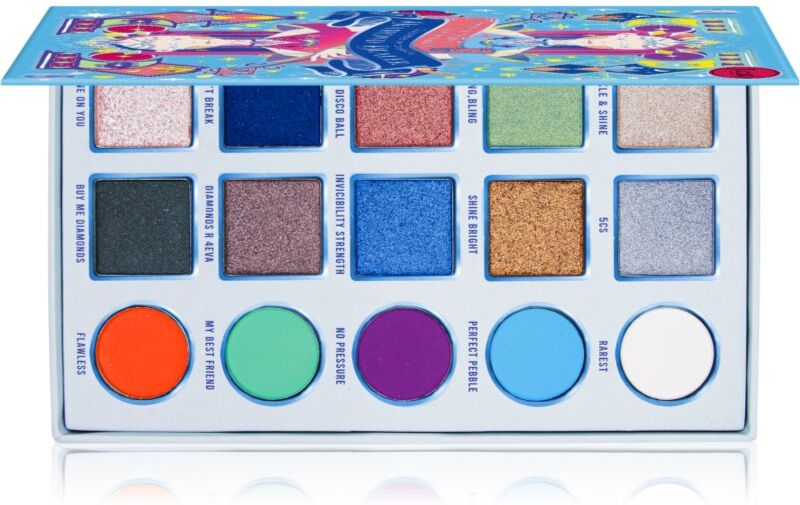
J.Cat Beauty House of Queens eyeshadow palette shade 104 Diamond Dealer 12.5 gJ.Cat Beauty House of Queens, 12.5 g, Eyeshadow Palettes for Women, Do you want to enhance your look, contour your eyes and accentuate their beauty? The J.Cat Beauty House of Queens eye makeup palette opens up possibilities for creating a wide variety of eye looks. It contains not one but several pressed eyeshadows, which complement each other ideally and can therefore be combined perfectly to create various looks – from subtle daytime to bold evening makeup. Each shade provides even pigment coverage and is easy to apply, blend or mix with other shadows without creating unwanted harsh transitions. Characteristics: create natural eye makeup long-lasting washes out easily shades can be combined easily shimmering and matte effect for day and evening makeup Ingredients: mirror How to use: Apply shadows to the eyelids with a brush, foam applicator or fingertips.10,10 £*Shipping: 3,99 £Secure redirect to the provider
-
Suhr Pro Series S3 Dealer Select GG Orange 2011 Electric Guitar orange - RefurbishedThis is a Suhr Pro Series S3 Dealer Select electric guitar in Custom GG Orange finish with matching headstock. Suhr guitars are the work of John Suhr, who started his career as a guitar technician at Rudy's Music Stop in NYC. He began building guitars in 1974; creating Mark Knopfler's famous signature model under the Pensa-Suhr name in 1984. Made in the USA, this guitar is a custom order of 3 of 5 guitars that were commissioned by Guitar Guitar, features include a bolt-on construction comprising a Basswood body with a Flamed Maple top, Maple neck and a 22 Stainless Steel fret Indian Rosewood fingerboard. This guitar is equipped with Chrome hardware including a Gotoh 510 2-Post tremolo bridge with Steel Block Saddles, a Tusq nut and a set of Sperzel locking tuning machines. The pickups are installed in an HSS configuration, with a Suhr Aldrich humbucker in the bridge and a pair of Suhr JST ML/Mike Landau single-coils in the neck & middle positions. These are wired to a 5-way selector switch, master volume and a master tone control. The Maple neck sits comfortably in the hand, with the Even Slim ‘C’ profile feeling slender, whilst the Satin finish which has been lightly polished to a Gloss to the rear of the neck provides a comfortable, smooth and articulate playing experience up and down the neck. The Maple fingerboard is pleasant to the touch, and with its 10"-14" compound radius and Jumbo Stainless Steel frets assist with string bends and vibrato techniques, delivering a tailored ‘modern’’ playing experience in any position, whilst offering a nice balance between comfortable chord playing and practicality for quick lead lines. The double cutaway body design allows for great access to the instruments highest frets, allowing the player to make the most of the entire register. The Suhr JST ML/Mike Landau single-coils pickups deliver quintessential ‘Strat’ sounds with a dash of Suhr's signature refinement. They sound sparkly with a hint of darkness, whilst retaining clarity with each note. The Suhr Aldrich humbucker in the bridge provides a bright & snappy tone without sounding at all brittle or harsh, and with a hot output can drive your amp into a searing overdrive tone for rock rhythm parts. However, with subtler amp settings the bridge offers a glassy clean tone. The middle position provides bright trebles and full warm bass, and lends itself well to rhythm tones. The neck pickup offers a smooth, warm, rounded tone that handles distorted tones as well as it handles clean tones. The simplistic controls offer the player a great platform that is ready for whatever is thrown at it.2490,00 £*Shipping: 0,00 £Secure redirect to the provider
-
SAMSUNG HG43U800FEU HU8000F Series - 43" LED-backlit LCD TV - Crystal UHD - 4K - for hotel / hospitalitySamsung HG43U800FEU - 43" Diagonal Class HU8000F Series LED-backlit LCD TV - Crystal UHD - hotel / hospitality - Tizen Enterprise - 4K UHD (2160p) 3840 x 2160 - HDR - black468,99 £*Shipping: 0,00 £Secure redirect to the provider
-
What does isometry mean in art?
Isometry in art refers to the use of geometric shapes and forms that maintain their size and shape regardless of their position or orientation in space. This technique creates a sense of balance, harmony, and stability in the artwork. Isometric art often features precise, straight lines and angles, and is commonly used in architectural drawings, technical illustrations, and graphic design to convey a sense of accuracy and order. **
-
How is a standardized isometry correctly drawn?
A standardized isometry is correctly drawn by following specific guidelines. First, ensure that all three axes (x, y, z) are drawn at 120-degree angles to each other. Next, draw the object or shape in question with accurate proportions and angles, making sure to maintain the 120-degree relationship between the axes. Finally, label the axes and any important points or dimensions to clearly communicate the isometric view. By following these steps, a standardized isometry can be accurately and effectively drawn. **
-
What is an isometry with non-orthogonal vertices?
An isometry with non-orthogonal vertices is a transformation that preserves distances and angles between points, but the vertices are not at right angles to each other. This means that the shape is still congruent to its original form, but the angles between the edges are not necessarily 90 degrees. Isometries with non-orthogonal vertices can include translations, rotations, reflections, and glide reflections. These transformations are important in geometry and can help us understand the properties of shapes in different orientations. **
-
What is an isometry with non-orthogonal corners?
An isometry with non-orthogonal corners is a transformation that preserves distances and angles, but the corners of the shape are not at right angles to each other. This means that the shape is still congruent to its original form after the transformation, but the angles at the corners are not 90 degrees. Isometries with non-orthogonal corners can include rotations, reflections, translations, and glide reflections. These transformations are important in geometry and can be used to study the properties of shapes and figures. **
Similar search terms for Isometry
-
SAMSUNG HG50U800FEU HU8000F Series - 50" LED-backlit LCD TV - Crystal UHD - 4K - for hotel / hospitalitySamsung HG50U800FEU - 50" Diagonal Class HU8000F Series LED-backlit LCD TV - Crystal UHD - hotel / hospitality - Tizen Enterprise - 4K UHD (2160p) 3840 x 2160 - HDR - black588,99 £*Shipping: 0,00 £Secure redirect to the provider
-
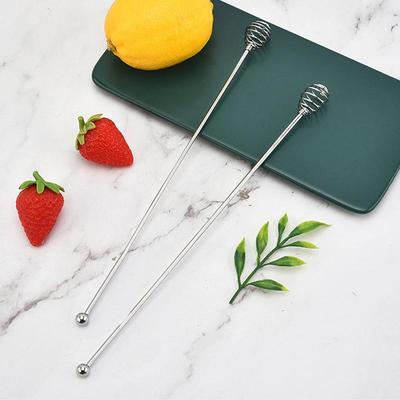
Youfap Market Stainless Steel Bartender Mixing Spoon, Elegant Cocktail Stirrer For Bar & Home Use Stainless Steel Bartender Mixing Spoon, Elegant Cocktail Stirrer For Bar & Home UseEnhance your bartending experience with the Stainless Steel Bartender Mixing Spoon, the perfect tool for creating smooth and expertly blended drinks. Designed for both professional bartenders and athome enthusiasts, this multifunctional stirrer adds...27,97 $*Shipping: 0,00 $Secure redirect to the provider
-
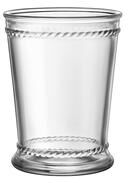
Bormioli Rocco Bartender 12.25 Ounce Julep Cocktail Glasses, Set of 6Discover the art of mixology with Bormioli Rocco's Bartender Collection, the perfect choice for transforming your rum and tropical fruit cocktails into unforgettable works of art.35,69 $*Shipping: 0,00 $Secure redirect to the provider
-
What is the difference between axonometry and isometry?
Axonometry and isometry are both methods used in technical and engineering drawing to represent three-dimensional objects on a two-dimensional surface. The main difference between the two is that axonometry is a type of parallel projection, where all the lines of the object remain parallel in the drawing, while isometry is a specific type of axonometric projection where the object is represented with equal foreshortening along all three axes. In other words, isometry maintains the same scale in all three dimensions, while axonometry in general does not. **
-
Is the task for isometry with 3 board projections correct?
Yes, the task for isometry with 3 board projections is correct. Isometry refers to a transformation that preserves the distance between points, and using 3 board projections can help to accurately capture the spatial relationships and distances between points in a three-dimensional space. By using multiple board projections, it is possible to ensure that the isometry is accurately represented in the transformation process. **
-
How much does a croupier earn?
The salary of a croupier can vary depending on factors such as location, experience, and the specific casino or establishment they work for. On average, a croupier can earn anywhere from $30,000 to $60,000 per year, with the potential for additional income from tips. In some high-end casinos, experienced croupiers may earn even more. Additionally, croupiers may receive benefits such as health insurance and retirement plans as part of their compensation package. **
-
Are bartender courses useful?
Bartender courses can be useful for individuals looking to enter the hospitality industry or advance their skills in mixology and customer service. These courses can provide valuable knowledge on cocktail recipes, bar management, and customer interaction, which can help individuals stand out in a competitive job market. Additionally, bartender courses often provide hands-on training and certification, which can increase job prospects and earning potential. However, the usefulness of bartender courses ultimately depends on an individual's career goals and the specific skills and knowledge they are seeking to gain. **
* All prices are inclusive of VAT and, if applicable, plus shipping costs. The offer information is based on the details provided by the respective shop and is updated through automated processes. Real-time updates do not occur, so deviations can occur in individual cases. ** Note: Parts of this content were created by AI.